


How to Design Effective Artist Merchandise That Fans Love
Most artist merch fails before it even reaches a fan. Not because the design is bad, but because it was built around what the artist thought looked cool rather than what the fan community actually connects with. The difference between merch that sells out and merch that collects dust in a storage unit usually comes down to one thing: intention.
Start With Your Artist Identity, Not a Blank Canvas
Effective merchandise design begins with a clear artist brand identity — your visual language, emotional tone, and the world you've built around your music. Before you think about product types or color palettes, you need to know what your art stands for and how that translates visually.
Think of your merch as a physical extension of your music. If your sound is raw and stripped-back, slick corporate-looking hoodies with a clean logo feel off. If your aesthetic is maximalist and theatrical, minimalist tees may underwhelm your fans. The visual storytelling in your merchandise should feel like it belongs in the same universe as your album artwork, your stage presence, and your social media identity.
Start by gathering your existing visual assets: album covers, press photos, color schemes, fonts you've used consistently. These aren't just references — they're the foundation your merch should grow from. Artists who skip this step end up with generic products that could belong to anyone.
Know What Your Fans Actually Want to Wear and Own
The best merch is something fans would choose to wear even if your name wasn't on it. That's the standard worth aiming for — wearability and lifestyle alignment over a logo slapped on a blank shirt.
Spend time in your fan community. Read comments, watch what people post when they attend your shows, pay attention to the aesthetic your most engaged listeners gravitate toward. Are they into vintage-washed graphics? Clean typography? Bold illustrated art? Your fans are already telling you what they want — you just have to listen.
Collectibility matters too, especially for dedicated fans. Items that feel like artifacts — a lyric sheet printed on heavy stock, a hand-numbered print, a pin with an obscure reference only real fans catch — create a sense of belonging that a standard t-shirt rarely achieves. Fan loyalty deepens when merch rewards the people who actually know your work.
Ask yourself honestly: would someone who's never heard of you still want this item? If yes, you're on the right track.
Choosing the Right Products for Your Audience
Product selection should follow your audience, not trends. Genre, fanbase age, and community culture all shape which product types actually move.
A few general patterns hold up across the industry:
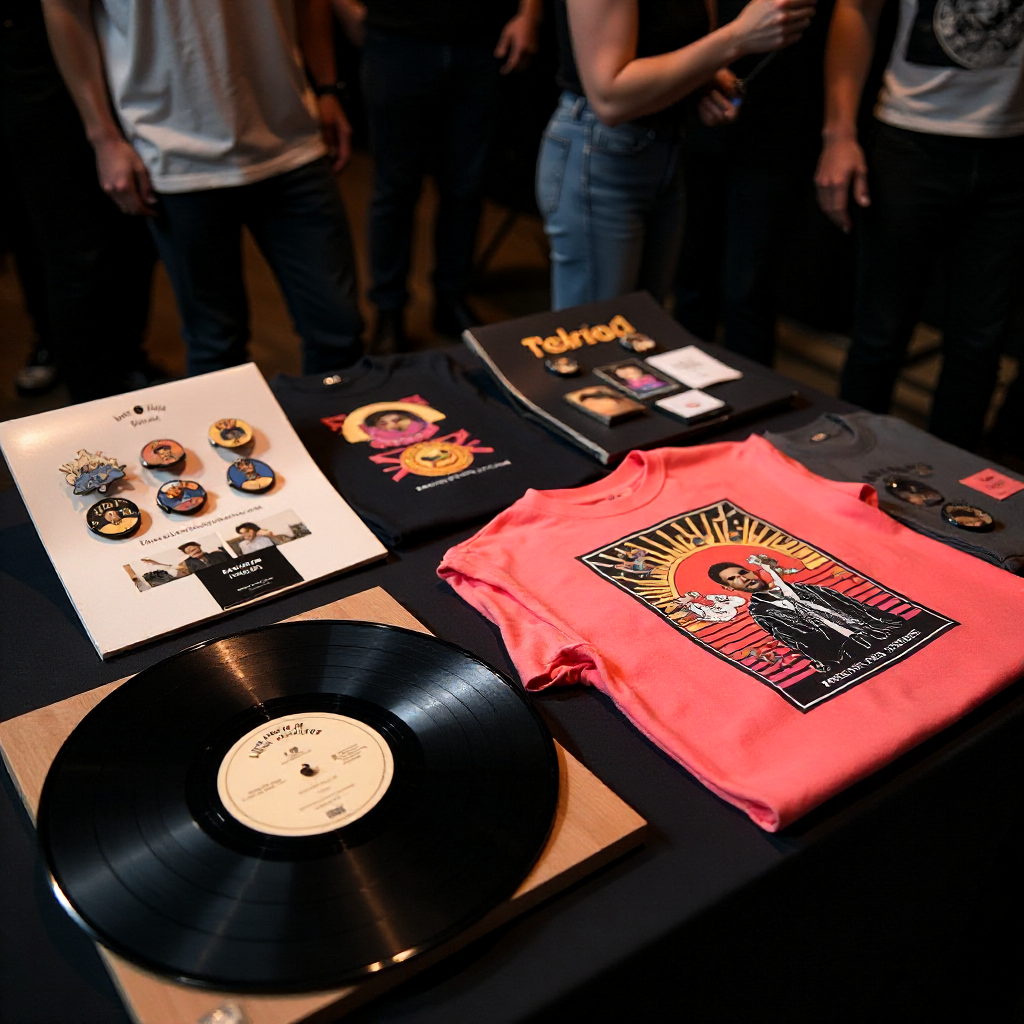
- T-shirts and hoodies remain the backbone of most merch tables and online music stores — they're wearable advertising and fans expect them.
- Vinyl records resonate strongly with listeners who value music as a physical experience, particularly in indie, folk, jazz, and rock communities.
- Accessories like enamel pins, patches, and tote bags offer lower price points that convert casual fans who aren't ready to spend $40 on a hoodie.
- Art prints and posters work well when your visual identity is strong — fans want to live inside the world you've created.
Younger fanbases often respond to accessories and affordable items they can layer together. Older, more established audiences tend to invest in higher-quality apparel and vinyl. Neither approach is universally right — the answer lives in knowing your specific community.
Design Principles That Make Merch Stand Out
Strong merchandise design follows a few non-negotiable principles: cohesion, restraint, and intentional artwork integration. Overcrowded visuals are the most common mistake artists make when designing their own products.
Keep your color palette tight — two or three colors that echo your existing brand identity will always outperform a rainbow of competing tones. Typography should be legible at a distance and consistent with fonts you've used in your music releases. If you've never established a font identity, now is the time.
When incorporating artwork — whether original illustrations, photography, or abstract graphics — give it room to breathe. A single strong image placed with intention reads as confident and considered. Filling every inch of a shirt with text and graphics reads as anxious and amateur.
One practical test: step back five feet from your design mockup. If you can't immediately read the core visual element, simplify. Fans wearing your merch in public are essentially walking billboards — clarity serves everyone.
Quality and Pricing: Why Cheap Merch Hurts Your Brand
Low-quality merchandise actively damages your artist brand. When a fan wears a shirt that fades after three washes or falls apart at the seams, that experience becomes associated with you — not the manufacturer.
Product quality and perceived value are directly linked. Fans who spend money on merch are making a statement about their identity and their relationship with your music. Handing them something that feels disposable signals that you don't take that relationship seriously.
Pricing should reflect real costs honestly. Underpricing cheap items to move volume rarely builds the kind of fan trust you're after. A better approach: charge a fair price for a genuinely good product, and explain the value when you can — "printed on 100% organic cotton" or "hand-numbered edition of 100" gives fans a reason to feel good about what they're paying.
The sustainable pricing formula isn't complicated: cover your costs, leave room for a reasonable margin, and price in a way that respects both your work and your fan's wallet. Merch that feels like a fair exchange builds repeat buyers. Merch that feels like a rip-off gets returned — or worse, talked about online.
Using Limited Editions and Exclusivity to Drive Demand
Scarcity is one of the most powerful tools in an artist's merch strategy. Limited edition releases, tour-exclusive items, and special drops create urgency that standard catalog products simply can't replicate.
The psychology here isn't manipulation — it's about making fans feel like they're part of something. A shirt only available at three shows on a specific tour becomes a memory, not just a product. A vinyl pressed in a run of 200 with hand-signed inserts becomes a collectible that fans hold onto for years.
You don't need to manufacture artificial scarcity. Natural constraints work just as well: a limited pressing run, a design tied to a specific album cycle, or a bundle available only during a release window. The key is communicating the limitation clearly so fans understand why acting now matters.
Exclusivity also deepens the relationship between artist and fan community. When someone owns something rare, they feel closer to the source. That emotional connection is worth far more than the revenue from a single transaction.
Selling Merch Through Your Online Store and Beyond
Your online music store is the permanent home for your merchandise — and how you present products there matters as much as the products themselves. A well-designed product listing with strong photography and honest copy converts browsers into buyers; a blurry photo and a one-line description does not.
Invest in proper product photography. Natural light, clean backgrounds, and lifestyle shots (someone actually wearing the shirt, not just a flat lay) help fans visualize owning the item. If you can show the product in context — at a show, in a creative environment that matches your aesthetic — even better.
Write product descriptions that tell a story. Where did the design come from? What inspired the colorway? Is this a limited run? Fans who feel connected to the backstory are more likely to buy and more likely to share. Your online store should feel like an extension of your artistic world, not a generic shopping cart.
Think beyond the store too. Merch drops announced through your newsletter or social channels, bundles tied to new releases, and fan-exclusive early access windows all create moments of engagement that keep your community active between releases.
Frequently Asked Questions
What merch sells best for independent artists?
T-shirts and hoodies consistently outperform other product types for most independent artists, followed by accessories like enamel pins and tote bags. Vinyl sells well for artists with an established listener base that values physical music. The best-selling items are always the ones most aligned with your specific fan community's lifestyle and budget.
How much should an artist charge for merchandise?
Pricing should cover your production costs plus a reasonable margin, while staying within range of what your fanbase can realistically spend. A well-made t-shirt typically retails between $30–$45 for independent artists; hoodies between $55–$75. Accessories can anchor a lower price point to serve casual fans. Avoid underpricing — it signals low value and makes sustainable merch production harder.
Should artist merch always feature album artwork?
Not necessarily. Album artwork works well when it's visually strong and the release is current, but merch tied too literally to one album can feel dated quickly. Evergreen designs built around your broader visual identity often have longer commercial lives and appeal to fans across your full catalog.
How do I make my merch feel unique and not generic?
Start with your specific artist identity rather than trends. Use original artwork or illustrations rather than stock graphics. Add details that reward your most dedicated fans — obscure lyrics, inside references, hand-numbering. The more your merch reflects something only you could have made, the less generic it will feel.
What's the minimum order quantity I should start with?
For physical print runs, starting small is almost always smarter than over-ordering. Many quality apparel printers work with runs as low as 25–50 units. Starting with a smaller quantity lets you test designs with your audience, avoid dead stock, and maintain the sense of scarcity that makes limited items valuable. Scale up once you know what resonates.