

How to Start Your Own Music Merch Business: A Step-by-Step Guide
Selling merchandise is one of the most direct ways for an independent artist to build a sustainable income outside of streaming royalties and live shows. A well-run merch business doesn't just generate cash — it turns fans into walking billboards and deepens the connection between your music and the people who love it. This guide walks you through every step, from locking in your brand identity to shipping your first order.
Why Merch Is a Revenue Pillar for Independent Artists
Merchandise gives artists a revenue stream they actually control. Unlike streaming platforms that pay fractions of a cent per play, a single $30 T-shirt sale can net you $12–$18 in profit depending on your production model. For an independent artist with even a modest fanbase, that adds up quickly.
Streaming income is largely passive and algorithmically dependent. Touring income is real but expensive to generate. Merch sits in a different category — it scales with your audience, requires relatively low upfront investment to start, and works whether you're on the road or releasing music from your bedroom.
There's also an intangible value here. Fans who buy a hoodie with your artwork on it are making a statement about their identity. That relationship between artist brand and fan loyalty is something no playlist placement can replicate.
Define Your Artist Brand Before You Design Anything
Before you pick a single product, you need a clear visual identity — because your merch is a physical extension of your music, not just a product with your name on it.
Start with three core elements: your logo, your color palette, and your overall aesthetic. A metal band and an indie folk singer can both sell T-shirts, but the design language should feel completely different. Ask yourself: what does my music look like? What imagery, typography, and tone would a longtime fan immediately recognize as mine?
If you don't have a logo yet, hire a designer or use a tool like Canva to create something simple and scalable. A strong logo works at thumbnail size on a phone screen and at full size on a hoodie back. Avoid overly complex designs — they lose detail in print and look muddy on fabric.
Color consistency matters more than most artists realize. Stick to 2–3 colors that match your existing visual presence (social media, album art, website). When fans see your merch, it should feel like part of the same world as your music.
Choose the Right Merch Products for Your Fanbase
The best starting product catalog is a small one. Trying to launch with 15 SKUs before you've made a single sale is a fast way to waste money and create fulfillment headaches.
For most independent artists, a practical starting lineup looks like this:
- T-shirts — the universal entry point, high demand, easy to produce
- Hoodies or crewnecks — higher price point, strong perceived value
- Posters or art prints — low cost to produce, great for album releases
- Stickers or pins — impulse buys at shows, low barrier for new fans
Once you've validated demand, you can expand into vinyl, hats, tote bags, or accessories. But in the beginning, depth beats breadth. Two great T-shirt designs will outsell ten mediocre ones every time.
Genre matters here too. Electronic and hip-hop audiences tend to respond well to streetwear-influenced apparel. Folk and Americana fans often gravitate toward quality basics and art prints. Pay attention to what artists in your space are selling — not to copy them, but to understand what your shared audience already buys.
Pick Your Production Model — Print-on-Demand vs. Bulk Inventory
The two main production models for music merch are print-on-demand (POD) and bulk inventory, and each comes with real trade-offs that depend on where you are in your career.
Print-on-Demand
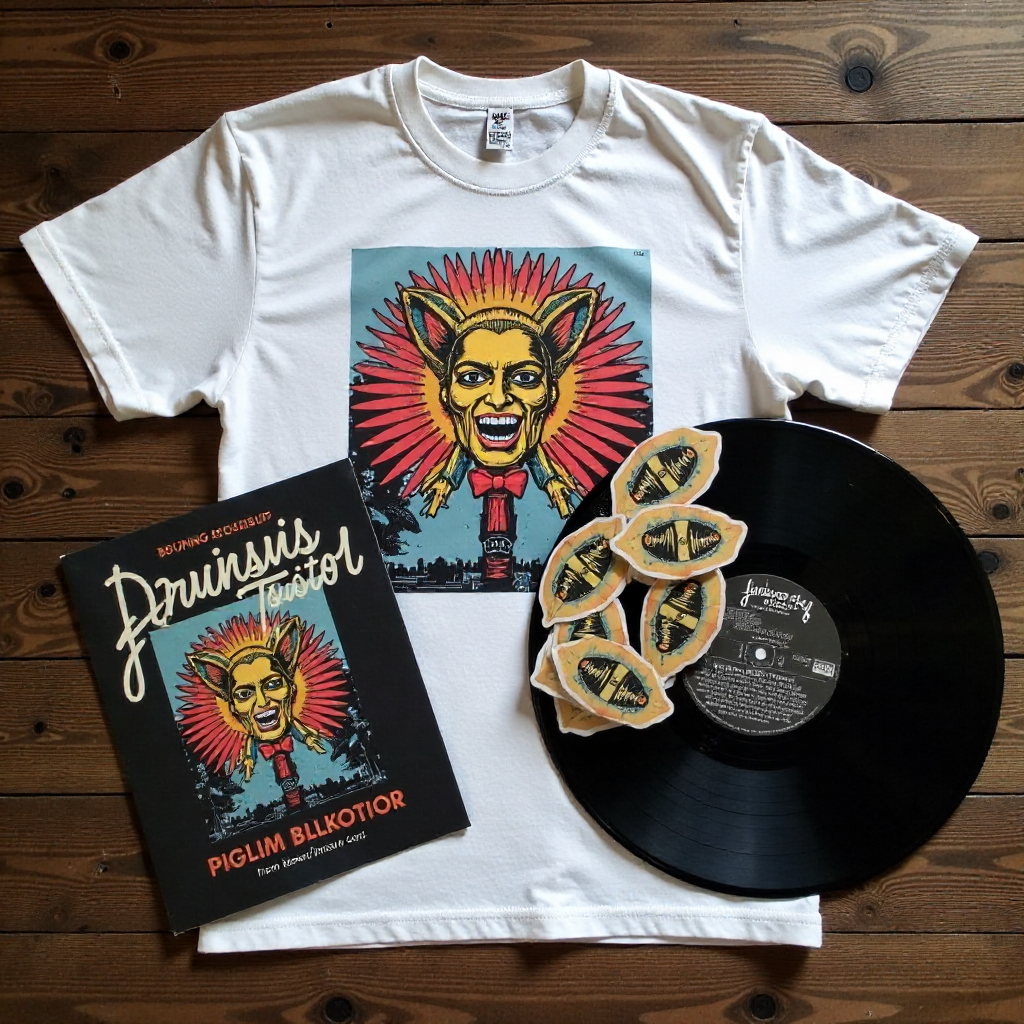
With POD, products are printed and shipped individually when a customer places an order. There's no upfront inventory cost, no storage required, and no risk of sitting on 200 unsold hoodies. For an artist just starting out, this model removes the biggest financial barrier to entry.
The compromise is margin. POD services charge per unit at a higher cost than bulk printing, which means your profit on a $35 hoodie might be $8–$12 instead of $18–$22. You also have less control over packaging and fulfillment speed, which can affect the customer experience.
Bulk Inventory
Ordering in bulk from a screen printer or manufacturer dramatically lowers your cost-per-unit — often by 40–60% compared to POD. That means more profit per sale and the ability to include custom packaging, thank-you notes, or tour-exclusive items that feel premium.
The trade-off is obvious: you're paying upfront for inventory you may not sell. A run of 100 shirts might cost $600–$800 before you've made a single dollar back. For artists with an established fanbase and predictable demand, bulk inventory is the smarter long-term model. For everyone else, start with POD and switch when your sales volume justifies the investment.
Set Up Your Online Merch Store
Your online storefront is where the transaction happens, and it should be as frictionless as possible for fans to find and buy from it.
The simplest approach for most independent artists is to use a platform that integrates directly with your existing music presence — whether that's your artist website, a music distribution profile, or a social media shop. The goal is to minimize the number of clicks between a fan discovering your music and completing a purchase.
When setting up your store, prioritize these elements:
- Clean product photography (even a phone camera works if the lighting is good)
- Clear size guides for apparel items
- Transparent shipping costs shown before checkout
- A simple, mobile-friendly checkout process
If you're using a POD service, many offer built-in storefront tools that handle payment processing and fulfillment automatically. If you're managing bulk inventory, you'll need to handle order processing and shipping logistics yourself or through a fulfillment partner.
Price Your Merch for Profit (Without Alienating Fans)
Pricing music merch requires balancing your cost-per-unit with what your audience is realistically willing to pay. The formula is straightforward: cost per unit + desired profit margin = selling price. The art is in calibrating that margin to your fanbase.
A general benchmark: aim for a 2.5x to 3x markup on your cost. If a T-shirt costs you $10 to produce, price it at $25–$30. If a hoodie costs $22, price it at $55–$65. These ranges are consistent with what fans expect to pay for artist merch and leave enough room to run occasional discounts or bundle deals without losing money.
Don't undercut yourself trying to be accessible. Fans who genuinely support your music will pay fair prices. Pricing too low actually signals low quality and undervalues your brand. That said, offering a lower-cost entry point — like a $5 sticker pack or a $15 poster — gives newer or younger fans a way to support you without committing to a $60 hoodie.
Factor in platform fees, payment processing (typically 2–3%), and shipping costs when calculating your real margin. What looks like a $15 profit on paper can shrink to $9 after fees if you haven't accounted for everything.
Promote and Sell Your Merch to Your Audience
Great merch doesn't sell itself — promotion is what connects your products to the fans who want them. The good news is that as a musician, you already have the most powerful promotional tool available: your music and your story.
Social media is your primary channel. Instagram and TikTok are particularly effective for merch promotion because they're visual platforms. Show the product being worn, film the unboxing, share the design process. Authentic content outperforms polished ad creative almost every time for independent artists.
A few tactics that consistently drive merch sales:
- Limited edition drops tied to album releases or tour dates — scarcity creates urgency
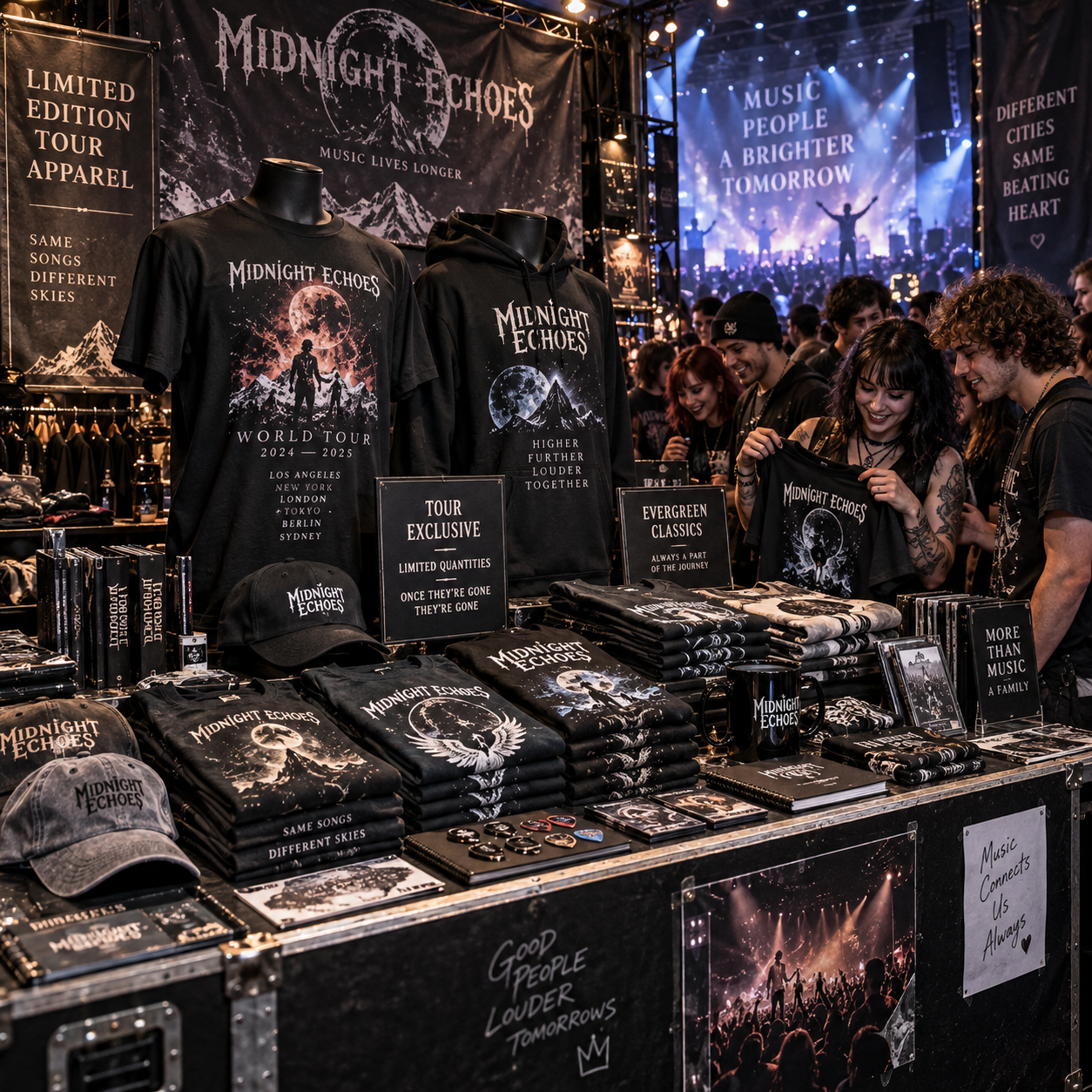
- Tour merch tables with exclusive items only available in person
- Email list announcements before public launches (reward your most loyal fans)
- Collaborations with other artists or local designers for one-off pieces
The artists who sell the most merch aren't necessarily the most famous — they're the ones with the deepest fan relationships. When your audience feels genuinely connected to what you're making, buying a piece of merch becomes a way for them to participate in something they care about. Build that relationship first, and the sales will follow.
Frequently Asked Questions
How much money do I need to start a music merch business?
With a print-on-demand model, you can technically start with $0 in inventory costs — you only pay when a customer orders. Budget $50–$200 for design work and store setup. Bulk inventory requires more upfront capital, typically $500–$1,500 for a small first run.
Do I need to trademark my band name or logo before selling merch?
You're not legally required to trademark before selling, but registering your band name or logo with the U.S. Patent and Trademark Office gives you stronger legal protection if someone copies your brand. It's worth doing once your merch business generates consistent revenue.
What is the best print-on-demand service for musicians?
The best POD service depends on your product range, target market, and integration needs. Compare options based on print quality, fulfillment speed, product variety, and how well they connect with your existing storefront. Order samples before committing — print quality varies significantly between providers.
How do I handle returns and customer service for merch orders?
Set a clear returns policy on your store page before launch. For POD orders, most services handle defective item replacements directly. For bulk inventory, you'll manage returns yourself — keep it simple with a 30-day window for unworn items in original condition.
Can I sell merch if I only have a small fanbase?
Yes — and you should. A small, engaged fanbase will support you more reliably than a large, passive one. Start with 1–2 products, use POD to minimize risk, and treat early merch buyers as your most valuable advocates. They're the ones who'll wear your shirt to a show and introduce your music to someone new.