


The Evolution of Music Merch: From Band T-Shirts to Limited Edition Collectibles
Music merchandise has traveled a long way from the folding table outside a sweaty venue. What started as a practical way to keep fans connected to their favorite artists has grown into a multi-billion dollar industry where a single item can sell out in minutes and resell for ten times its original price. The story of how we got here is really a story about fan culture, identity, and the enduring human need to own a piece of something that moves you.
Where It All Began — The Birth of Band Merchandise
Band merchandise as we know it traces its roots to the 1960s and 1970s, when rock tours first created a demand for physical souvenirs. Early artist merch was almost entirely functional: programs, buttons, and the occasional poster sold at the venue door. The Rolling Stones and The Beatles were among the first acts to recognize that fans wanted more than just the music — they wanted to take something home.
These early items were rarely considered collectibles at the time. They were mementos, proof that you were there. But decades later, those original tour programs and promotional items from the 1960s and 1970s command serious prices at auction, which tells you something important: fan culture has always had a long memory.
The commercial infrastructure around artist merchandise was still primitive in those early years. Most deals were informal, quality was inconsistent, and artists received a small fraction of sales. That would change dramatically as the music industry matured.
The T-Shirt Era — How Wearable Merch Became a Fan Staple
The band t-shirt became the defining format of music merchandise because it solved a simple problem: fans wanted to wear their loyalty. By the late 1970s and through the 1980s, the concert tee had become a cultural artifact in its own right.
Heavy metal and punk scenes accelerated this. A Metallica "Master of Puppets" tour shirt or a Ramones tee wasn't just merchandise — it was a signal to other fans, a way of declaring tribal membership without saying a word. Wearable merch turned fans into walking billboards, which benefited artists enormously at a time when social media didn't exist to spread the word.
The vintage band tee market today reflects just how powerful that era was. Original 1970s and 1980s tour shirts regularly sell for hundreds of dollars in secondhand markets, valued both for their rarity and the cultural weight they carry. The lesson wasn't lost on modern artists: authenticity and era-specific design matter more than most people realize.
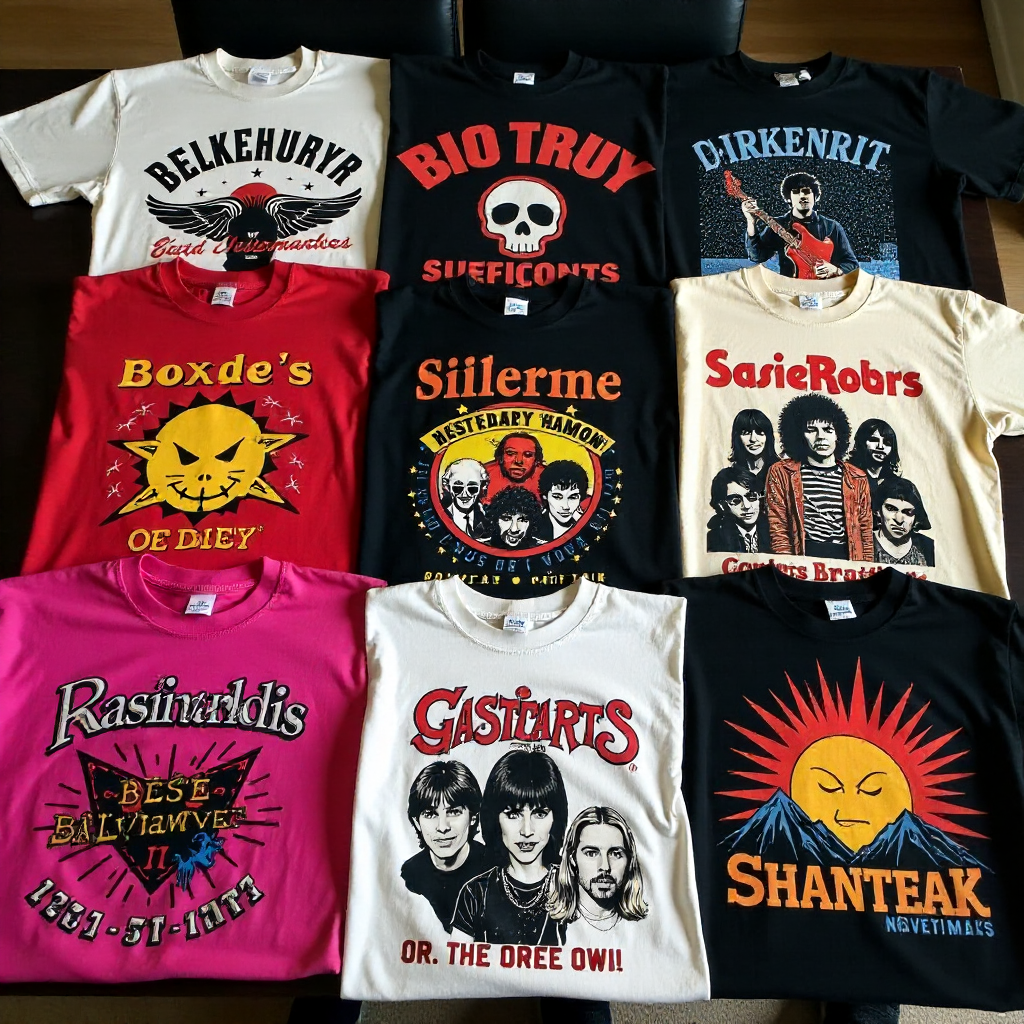
Expanding the Catalog — Beyond Apparel Into Lifestyle Products
By the 1990s and early 2000s, artist merch had expanded well beyond t-shirts into a full lifestyle catalog. Hats, hoodies, posters, tote bags, phone cases, and accessories became standard offerings at any serious merch table or online store.
This expansion reflected a shift in how fans thought about their relationship with artists. A hoodie worn daily creates a different kind of connection than a shirt pulled out for concerts. Merchandise was becoming part of everyday life, not just a souvenir from a specific event.
Artists and their teams began approaching merch more strategically — thinking about seasonal releases, coordinating designs with album aesthetics, and building recognizable visual languages that extended the music's identity into physical objects. The merch table became a brand extension, not an afterthought.
The Rise of Limited Edition Drops and Collectible Culture
Scarcity changed everything. The shift toward limited edition merch drops — timed releases of small-quantity items that sell out quickly — transformed artist merchandise from a passive purchase into an event. Fans began setting alarms, refreshing pages, and joining waitlists the same way they'd queue for concert tickets.
The psychology here is straightforward: when something is rare, it becomes more desirable. A standard hoodie is a product. A hoodie released in a run of 500 units, tied to a specific album moment, becomes a collectible. The emotional value compounds over time, especially if the artist's career grows.
Exclusive drops also changed fan engagement in a practical sense. They gave superfans a reason to follow artist channels closely, sign up for newsletters, and stay connected between album cycles. For artists, this created a direct relationship with their most dedicated audience — one that didn't require a label, a retailer, or a middleman.
The resale market around limited edition memorabilia has grown substantially as a result. Items from artists like Kanye West, Taylor Swift, and Billie Eilish have resold at multiples of their original retail price, which has only intensified the frenzy around new drops.
Vinyl, Physical Media, and the Nostalgia Collectibles Boom
Vinyl records have become one of the most significant categories in the modern music merch landscape. After decades of decline following the CD era, vinyl sales have grown consistently since the mid-2000s, driven by a combination of audiophile appreciation and pure nostalgia.
For merch purposes, vinyl is particularly compelling because it can be made into a collectible object without losing its core function. Picture discs, colored pressings, and limited-run variants give fans a reason to own multiple editions of the same album. An exclusive splatter vinyl available only through an artist's direct store is both something you listen to and something you display.
According to the Recording Industry Association of America (RIAA), vinyl has consistently outperformed CD sales in recent years — a remarkable reversal that underscores how much fans value physical media when it's presented thoughtfully. Bundled with art prints, lyric booklets, or signed inserts, vinyl becomes a premium collectible that justifies a higher price point and a deeper emotional investment.
Streetwear Meets Music — When Artist Merch Became Fashion
The line between artist merchandise and streetwear fashion has essentially dissolved. The crossover began in earnest with hip-hop culture in the 1990s, where artists like Run-DMC and later Jay-Z made fashion an inseparable part of their artistic identity. But it accelerated dramatically in the 2010s.
Kanye West's Yeezy collaborations and the merch drops surrounding his "Life of Pablo" album in 2016 are often cited as the moment mainstream fashion took artist merchandise seriously. Pieces sold through pop-up shops and online drops were reviewed by fashion critics alongside runway collections. The distinction between a band shirt and a designer piece had blurred beyond recognition.
This streetwear crossover elevated the entire category. Artist branding became a legitimate creative discipline, with artists hiring graphic designers, art directors, and fashion collaborators to develop merch that could stand alone as wearable art. Fans weren't just buying loyalty — they were buying into an aesthetic.
The practical effect for fans is that today's music merch can be genuinely fashionable, not just functional. A well-designed tour hoodie or a collaboration piece between an artist and a clothing brand can hold its own in any wardrobe context.
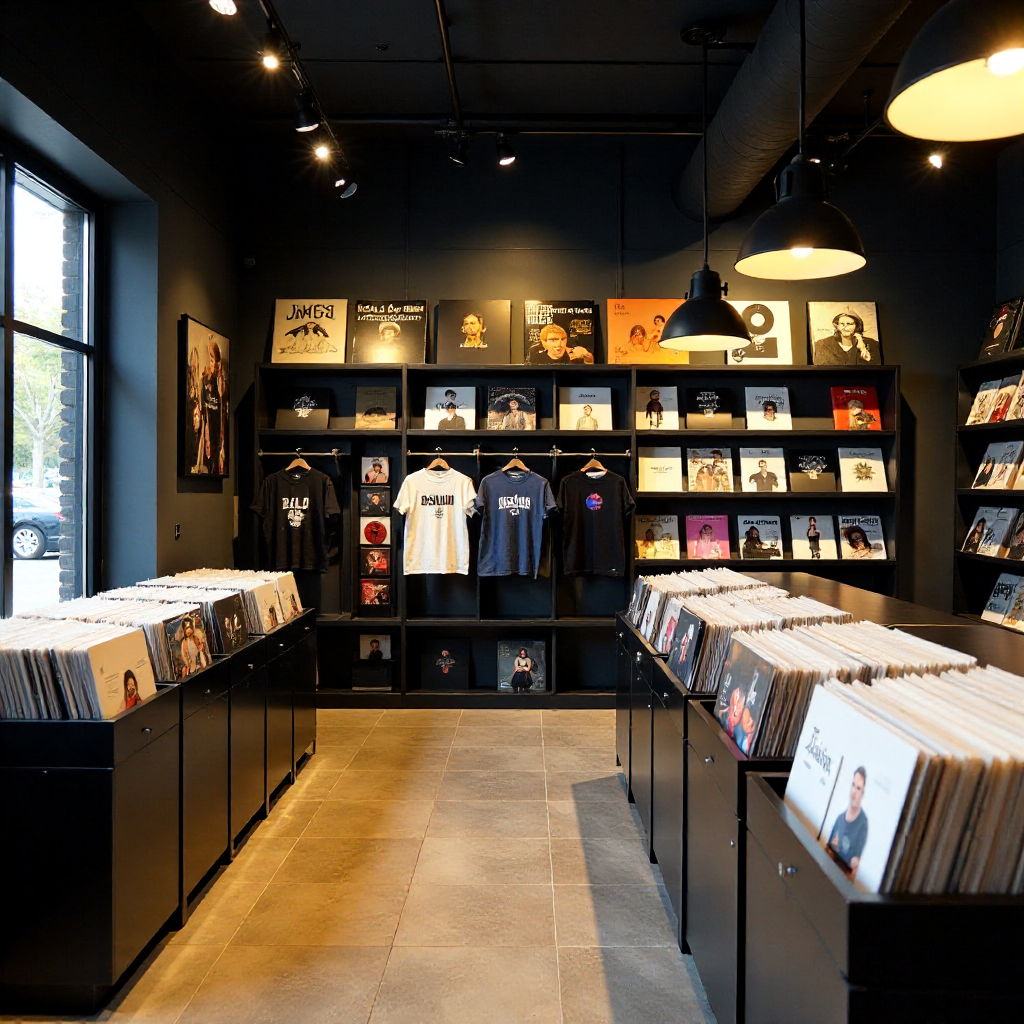
The Future of Music Merch — Direct-to-Fan and Experiential Offerings
The future of artist merchandise is being built around direct-to-fan retail and experiential products that go beyond physical objects. Online stores managed by artists or their teams have replaced the merch table as the primary point of sale, giving fans worldwide access to the same exclusive items once reserved for concert attendees.
Fan memberships and subscription models are emerging as a natural extension of this. Rather than waiting for a drop, dedicated fans can join a community that offers early access, exclusive bundles, and items not available anywhere else. This model rewards loyalty in a structured way and gives artists a predictable revenue stream outside of streaming royalties.
Experiential merch — items tied to a specific moment or experience — is also growing. Think signed certificates of authenticity, items that came from a recording session, or exclusive access passes bundled with physical products. These aren't just things you own; they're stories you can tell.
The through-line connecting all of it is the same impulse that made someone buy a tour button in 1967: the desire to hold onto something real in a world increasingly made of streams and pixels. Physical merch anchors the fan experience in a way that a playlist never quite can.
Frequently Asked Questions
What makes music merch a collectible rather than just a product?
Collectible status comes from a combination of scarcity, cultural significance, and condition. Items produced in limited quantities, tied to a specific moment in an artist's career, or featuring distinctive design work tend to appreciate in value over time. Provenance matters too — a signed or numbered piece carries more weight than an unsigned mass-market item.
Why are limited edition merch drops so popular with fans?
Limited drops create urgency and exclusivity that standard retail can't replicate. When only a few hundred items exist, owning one signals genuine dedication. The scarcity also makes the item feel more personal — you didn't just buy something; you competed for it and won.
How do artists benefit from selling merchandise directly to fans?
Direct-to-fan retail allows artists to keep a much larger share of revenue compared to traditional retail or venue splits. It also gives them full control over design, pricing, and timing of releases. Perhaps most importantly, it builds a direct relationship with the audience that doesn't depend on any third-party platform.
What types of music merch hold their value over time?
Vinyl records (especially limited pressings and picture discs), signed memorabilia, original concert posters, and early tour apparel from significant eras tend to hold or increase in value. Items tied to culturally important moments — a debut album, a farewell tour, a landmark concert — carry particular weight in the collector market.
Where is the best place to buy official artist merchandise?
Official artist websites and dedicated music merch stores are the most reliable sources for authentic, high-quality merchandise. Buying directly from an artist's store also ensures the purchase supports the artist more directly than third-party retail. For rare or vintage items, reputable auction houses and verified secondhand platforms are worth exploring — just verify authenticity carefully before purchasing.