


Collaborations in Music Merch: How Artists and Brands Create Products Fans Want
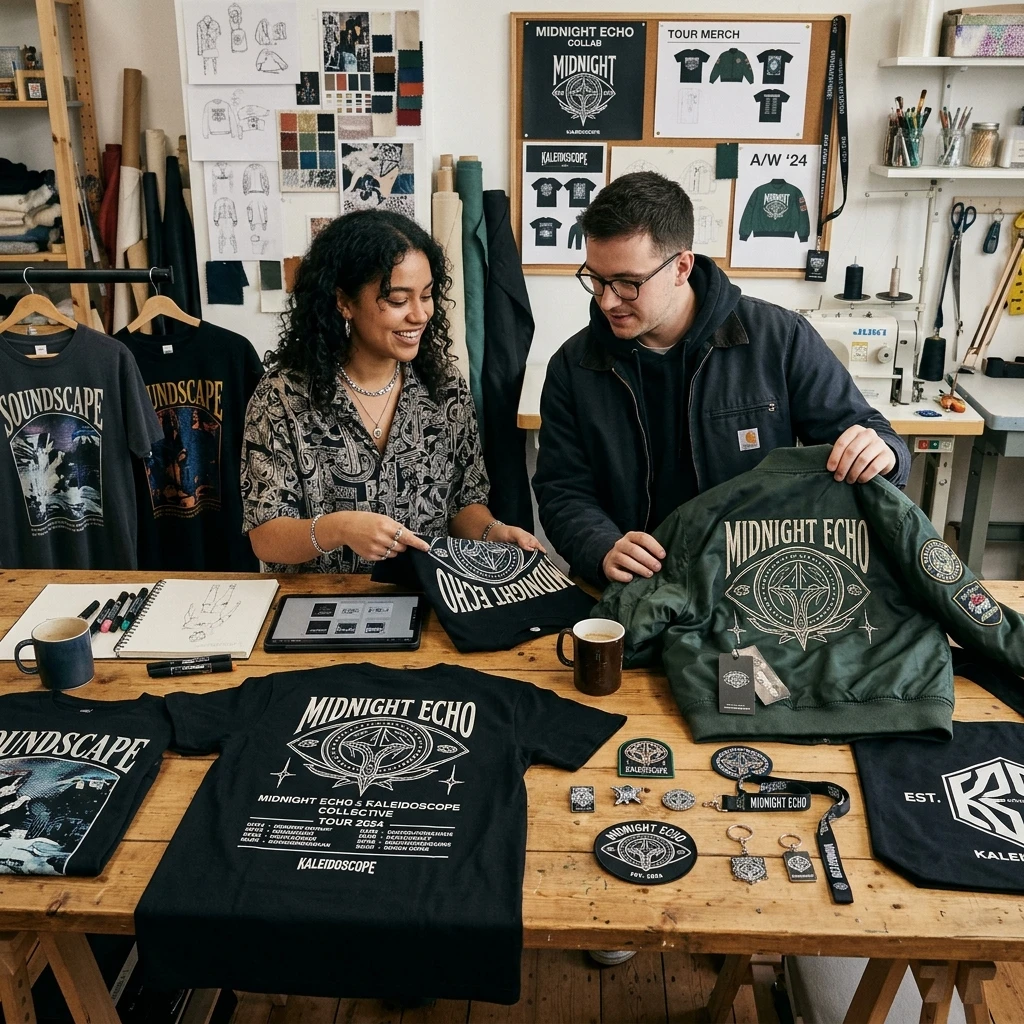
When an artist and a brand build merchandise together, the result can give fans something that neither side could make in quite the same way alone. A successful collaboration brings the artist’s identity into product design, production, and the fan experience, while giving the brand a creative partner with a distinct audience.
The idea alone does not guarantee a strong product or a successful launch. The partnership needs a clear purpose, suitable licensing and rights, reliable manufacturing, and an e-commerce plan that feels right for the fan community.
What an artist–brand merchandise collaboration involves
An artist–brand merchandise collaboration is a product partnership in which an artist and a commercial brand jointly shape and promote music-related goods. Unlike standard artist merchandise, it combines both parties’ creative or commercial contributions, often through co-branded design, special materials, a themed collection, or shared distribution.
Regular artist merch may feature an album title, tour dates, or the artist’s logo on a familiar product. A collaboration can go further: a skate brand might work with a musician on a graphic deck and matching apparel, or a fashion label might develop a capsule collection inspired by an album’s artwork and visual world. The brand contributes product expertise, manufacturing, retail access, or another capability; the artist contributes creative direction and a connection to their audience.
That division of work should be agreed early. “Co-branded” can mean a logo on a shirt, but it can also mean meaningful input into the cut, fabric, artwork, packaging, or story. The clearer the roles, the easier it is to make a product fans can understand and both partners can stand behind.
Common collaboration formats and products
Artist–brand collaborations can take the form of a single co-branded product or a broader collection. The right format depends on the artist’s identity, the brand’s strengths, production capacity, and how much demand can reasonably be served.
- Co-branded apparel: T-shirts, hoodies, outerwear, and headwear can carry artwork, tour references, or a joint visual identity. Fit, fabric, and print quality matter as much as the graphic.
- Accessories: Bags, jewelry, patches, socks, and other smaller goods may suit a focused partnership or give fans a lower-priced entry point. Check that the item is useful and well made rather than simply logo-heavy.
- Special-edition items: A branded instrument accessory, collectible, or physical release can connect the product closely to music-making or a particular project.
- Themed collections: A capsule may bring several products together around an album, tour, city, visual era, or shared creative idea.
A limited-edition drop can help make a collection feel distinct, especially when scarcity reflects a real production run or release moment. It also adds pressure: fans may miss out, and a rushed reorder can undermine the promise of exclusivity. A small first release, preorder, or clearly stated restock policy can help partners balance demand with realistic inventory planning.
Why artists and brands partner
Artists and brands partner to combine creative reach, product capabilities, and audience connection. Each side can bring something useful to music merchandise, but the value depends on whether the collaboration offers a genuine reason to exist.
For artists, a brand partnership may provide access to specialist design, materials, manufacturing, retail channels, or a new audience. It can also extend an artist’s visual world beyond standard tour shirts. The trade-off is reduced control if approval rights, product standards, and creative roles are vague. A recognizable brand name does not automatically make a product more meaningful to fans.
For brands, working with an artist can add a distinctive creative perspective and introduce products to a fan community that might not otherwise encounter them. The artist’s participation should be more substantial than a promotional post if the product is presented as a true collaboration. Otherwise, fans may read it as a standard endorsement wearing a merch label.
For fans, the potential benefit is a product with a clear point of view: something wearable or collectible that connects an artist’s work with the brand’s craft. Shared visibility can introduce each partner to new people, but neither audience size nor social engagement guarantees sales. Product relevance, price, availability, and trust all influence the response.
What makes a collaboration feel authentic to fans
A music merch collaboration feels authentic when the product fits the artist’s identity, offers thoughtful design and quality, and tells a believable story. Fans notice whether the partnership makes creative sense, not just whether both logos appear on the same label.
Start with fit. Ask whether the brand’s history, materials, or product category connects naturally with the artist’s sound, values, or existing visual language. A musician known for handmade instruments might make a more convincing accessories partnership with a craft-focused maker than with a label chosen only for its reach. That does not mean partners must share identical audiences; they do need a credible reason to work together.
Then look closely at the object itself. Is the garment comfortable? Does the artwork reproduce well? Is the price consistent with the materials and expected quality? Fans are more likely to value a product they can use, wear, or display than one that feels like a logo placement with a story added afterward.
Storytelling works best when it comes from the making. Explain the design choices, the materials, or the connection to a song or era, and let the artist’s role be specific. Avoid implying that a product is sustainable, locally made, or artist-designed unless those claims are accurate. Credibility is difficult to recover once fans feel misled.
Planning a collaboration from concept to launch
To plan a music merch collaboration, define the shared idea, agree on responsibilities and rights, develop a realistic product range, and prepare production and sales before announcing a launch date. Strong execution protects both the creative concept and the fan experience.
- Choose partners for fit. Identify what each side brings and why the collaboration belongs in the artist’s world. Discuss audience, product category, quality expectations, and any reputational concerns.
- Set the scope. Decide whether the project is one item or a themed collection, how many designs and sizes to offer, and whether the release will use ready inventory, preorders, or a limited run. A tight range can make quality control and inventory planning easier.
- Agree on product design and approvals. Set a process for artwork, samples, materials, pricing, packaging, and final sign-off. Build time for revisions and wear testing; a graphic that looks good on a screen may not translate well to fabric.
- Clarify licensing and rights. Put permissions in writing for artist names, likenesses, logos, artwork, lyrics, recordings, and any brand marks. Specify where, when, and on which products each asset can appear. Music rights can involve several parties, so confirm ownership and permissions rather than assuming the artist controls every element.
- Plan production and the e-commerce launch. Confirm quantities, quality checks, fulfillment, returns, customer support, and shipping regions. Product pages should state materials, sizing, price, availability, and shipping timing clearly. Coordinate announcements with inventory readiness so fans do not arrive at an empty or incomplete store.
Documenting these decisions may feel less exciting than designing the first sample, but it prevents common disputes about approvals, expenses, royalties, and unsold stock. If a partnership involves complex rights or significant investment, get professional legal and commercial advice before signing.
Measuring whether the collaboration worked
A collaboration worked if it met its goals for fans and partners, not simply if it sold out. Measure sales alongside product quality, audience response, operational performance, and whether the partnership strengthened each brand’s fit with its audience.
Before launch, choose a small set of indicators that match the project’s purpose. A limited release may prioritize sell-through and fulfillment quality; a broader collection may also aim to reach new customers. Useful measures include:
- Sell-through and returns: Track units sold against the quantity produced, then review returns and exchanges for issues with sizing, quality, or product descriptions.
- Fan response: Review comments, customer messages, and feedback from the artist’s usual merch channels. Look for reasons behind praise or complaints, not just the total number of reactions.
- Engagement and discovery: Assess clicks, product-page visits, and referral sources where available. These show whether people found the collection, though they do not prove that the partnership caused a purchase.
- Longer-term brand fit: Ask whether fans understood the collaboration and whether both partners would work together again. A product can sell well and still feel out of character.
- Execution: Record whether products arrived as promised, quality matched samples, and customer support handled issues effectively.
Interpret results in context. A modest collection can be valuable if it builds trust and gives fans a genuinely useful item; a fast sellout may reflect a small quantity rather than broad demand. The most informative review compares the original goals with both the numbers and the fan experience, then uses those lessons to shape the next release.