

The Role of Merchandise in Artist Revenue Streams: Why Merch Is No Longer Optional
A decade ago, selling T-shirts felt like a bonus — something artists did at the merch table after a show, mostly to cover gas money. Today, artist merchandise is one of the most reliable income pillars in the music business, and for many independent artists, it generates more consistent cash than streaming ever will. Understanding why that shift happened — and how to take advantage of it — matters whether you're playing 200-seat venues or building a fanbase from your bedroom.
The Shifting Economics of the Music Industry
The music industry's financial landscape has changed dramatically over the past fifteen years. Physical album sales collapsed, radio play stopped generating meaningful direct income for most artists, and digital downloads gave way to streaming platforms that pay fractions of a cent per play.
Streaming services like Spotify and Apple Music democratized music discovery, but they restructured who captures value. The platforms and rights holders benefit most from scale. Individual artists — especially independent ones — often find that millions of streams translate to a few hundred dollars. That reality forced a fundamental rethinking of how musicians build sustainable careers.
The response has been diversification. Artists who thrive financially today treat their career as a portfolio of revenue streams: live performances, sync licensing, brand deals, direct fan support, and merchandise. Each stream has different risk profiles and margins. Merch, particularly when sold direct-to-fan, offers some of the strongest margins of all.
Breaking Down an Artist's Revenue Streams
To understand where merchandise fits, it helps to see the full picture of how artists earn money in the current industry.
- Music streaming royalties — Passive income from platforms, but rates are low and payouts favor catalog volume over individual releases.
- Touring and live events — Historically the largest income source for working artists, though it comes with significant expenses: travel, crew, production, and venue fees.
- Licensing and sync deals — Placing music in film, TV, advertising, or games can generate substantial one-time fees and ongoing royalties, but opportunities are competitive and unpredictable.
- Brand partnerships — Endorsements and collaborations with companies can pay well, but typically require an established audience and personal brand alignment.
- Direct-to-fan sales — Merchandise, exclusive content, vinyl, and digital downloads sold directly to fans, cutting out intermediaries and maximizing margin.
Of these, direct-to-fan sales — with merchandise at the center — give artists the most control. There's no algorithm deciding how much you earn, no platform taking the majority of revenue, and no middleman between you and the person who loves your music enough to spend money on it.
Why Merchandise Has Become a Top Revenue Driver
Merchandise has risen to become a primary income source because fan loyalty converts directly and reliably into purchases. When someone connects deeply with an artist's music, they want something tangible to express that connection — and they're willing to pay for it.
For independent artists especially, the math is stark. Earning $1,000 from streaming requires roughly 250,000 streams at average rates. Selling 50 hoodies at $40 each achieves the same number. The hoodies take less time to sell if your audience is engaged, and the margin on a well-priced merch item can exceed 50% when managed efficiently.
Touring musicians have long known this. Veteran road managers will tell you that a strong merch table can cover an entire night's expenses — venue, sound, and crew — when the room is full and the products are right. But the shift now is that online merch sales have made this income available year-round, not just on tour dates.
The rise of social media accelerated this further. An artist can drop a limited item, post about it once, and sell out within hours if their audience is primed. That kind of velocity is impossible with streaming income.
Types of Merchandise That Perform Best for Artists
Not all merch performs equally. The categories that consistently drive the highest revenue share a few traits: they're wearable or displayable, they signal identity, and they feel worth the price.
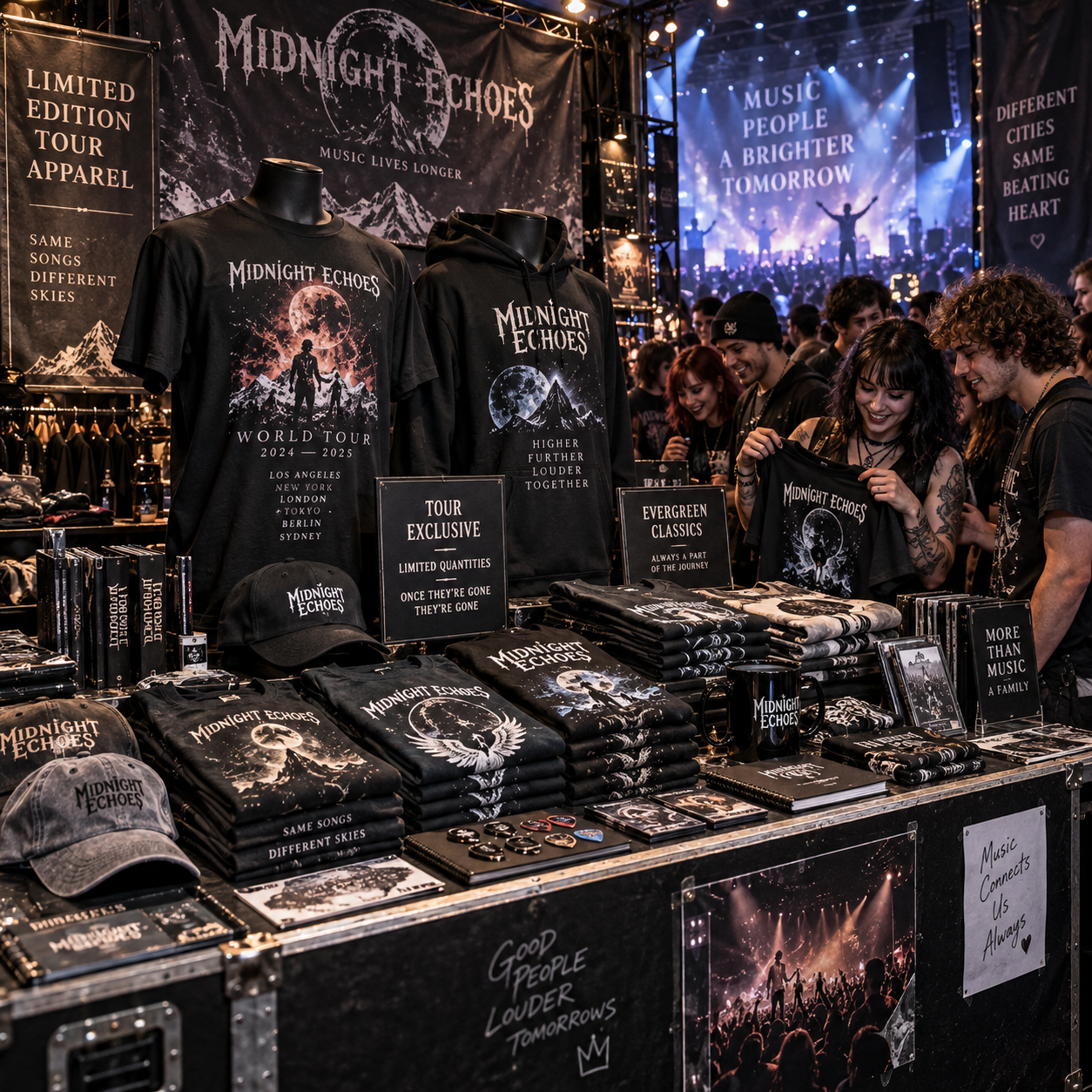
Apparel remains the top category across virtually every genre. T-shirts, hoodies, and hats carry strong margins, have broad appeal, and function as walking advertisements. A well-designed shirt does marketing work every time it's worn in public.
Vinyl records have staged a remarkable comeback. For music-focused audiences, a limited pressing of an album — especially with exclusive artwork or colored vinyl — commands premium pricing and sells fast. Vinyl bundles that pair a record with a signed print or patch often outperform the record alone.
Limited edition and exclusive items drive urgency. Numbered prints, tour-specific pieces, or items only available during a release window create scarcity that motivates faster purchasing decisions. Fans who've missed past exclusives learn to act quickly.
Bundles — combining music and merchandise into a single purchase — are particularly effective for new releases. A bundle that includes a digital album, a T-shirt, and a sticker pack at a slight discount over buying separately increases average order value while rewarding fans who want to support comprehensively.
The Power of an Online Merch and Music Store
Running a dedicated online music store gives artists something no third-party marketplace can offer: full ownership of the customer relationship. When a fan buys from your store, you capture their email address, their purchase history, and the ability to reach them directly next time you have something to sell.
Third-party platforms have their place for discovery, but they take a cut of every transaction and keep the customer data for themselves. A direct store inverts that dynamic. The margins are higher, the data is yours, and the brand experience is entirely under your control — from the layout and photography to the packaging and thank-you note inside the box.
For independent artists, this is where the real long-term value builds. Each sale through a direct channel deepens the artist-fan relationship in a way that a stream never does. The fan made an active choice, spent real money, and now has a physical object connecting them to your work. That's a qualitatively different relationship than passive listening.
Established artists with significant followings use their online stores as launch pads for major drops, pre-orders, and exclusive bundles that generate concentrated revenue spikes around album cycles. Emerging artists can use the same model at smaller scale — and build the infrastructure early so it's ready when the audience grows.
Merchandise as a Fan Engagement and Marketing Tool
Merch does double duty: it generates income and deepens the connection between artists and their audience. Every item a fan wears or displays is a conversation starter — an advertisement created by someone who chose it voluntarily, which makes it far more credible than paid promotion.
Smart artists treat merch drops as events. A limited release announced through social media, with behind-the-scenes content showing the design process, generates anticipation and fan engagement before the item is even available. The purchase becomes part of the fan experience, not just a transaction.
Merchandise also extends the life of a release cycle. When an album drops, a coordinated merch launch keeps fans engaged across multiple touchpoints — the music itself, the merch reveal, the unboxing content fans post when orders arrive. That organic content amplifies reach without additional marketing spend.
Some artists take this further by involving fans in the design process — running polls on colorways, letting supporters vote on which design gets produced. This turns passive buyers into active participants, and participants have a stronger emotional investment in the outcome.
Building a Sustainable Merch Strategy
A sustainable merch strategy treats merchandise as a long-term business asset, not a series of one-off drops. The artists who build lasting merch income approach it with the same intentionality they bring to their music.
Start with a small, high-quality core range rather than trying to offer everything at once. Two or three items done well — with strong photography, thoughtful packaging, and reliable fulfillment — build more trust than a sprawling catalog with inconsistent quality. Trust is the foundation of repeat purchases.
Time merch drops to coincide with music releases, tour announcements, or milestones. These moments concentrate audience attention and buying intent. A fan who just heard your new single for the first time is primed to want something tangible from that experience.
Pricing deserves honest attention. Underpricing feels like a discount but can cheapen the perceived value of your brand. Overpricing kills conversion. Research what comparable artists charge, factor in your actual costs, and price to reflect the quality of what you're offering. Fans who value your work will pay a fair price — they don't need a bargain, they need to feel the exchange is worth it.
Finally, treat your customer list as one of your most valuable assets. Every person who buys from your store is a direct line of communication that no platform can take away. Email them when something new drops. Thank them for their support. Make them feel like insiders, not just customers.
Frequently Asked Questions
How much of an artist's income typically comes from merchandise?
The share varies widely by career stage and genre, but for touring artists, merchandise can account for anywhere from 20% to over 40% of total income during active periods. Independent artists who prioritize direct-to-fan sales often see merch representing an even larger proportion of their earnings compared to streaming royalties.
Can independent artists make a living from merch sales alone?
Merch alone is rarely sufficient as a standalone income, but combined with streaming, live performances, and direct fan support, it forms a critical part of a viable independent income. Artists with highly engaged audiences in the thousands — not necessarily millions — have built sustainable businesses around merchandise.
What is the best platform to sell artist merchandise online?
The best platform depends on your priorities. Dedicated music merch platforms offer built-in audiences and integrations with music services. A standalone online store gives you more control over margins and customer data. Many artists use a combination: a direct store for primary sales and a third-party platform for discovery and convenience.
How do artists decide what merchandise to create?
Most artists start with what resonates in their existing visual identity — artwork, symbols, or phrases that fans already respond to. Listening to what fans ask for, watching what sells at live shows, and testing small runs before committing to large inventory are all practical approaches to product selection.
How does merch revenue compare to music streaming income?
For most independent and mid-level artists, a well-executed merch strategy generates significantly more per-fan revenue than streaming. A single merchandise purchase from one fan can equal the streaming royalties generated by thousands of plays. This gap is why many artists now treat direct-to-fan sales as a financial priority over chasing streaming numbers.