

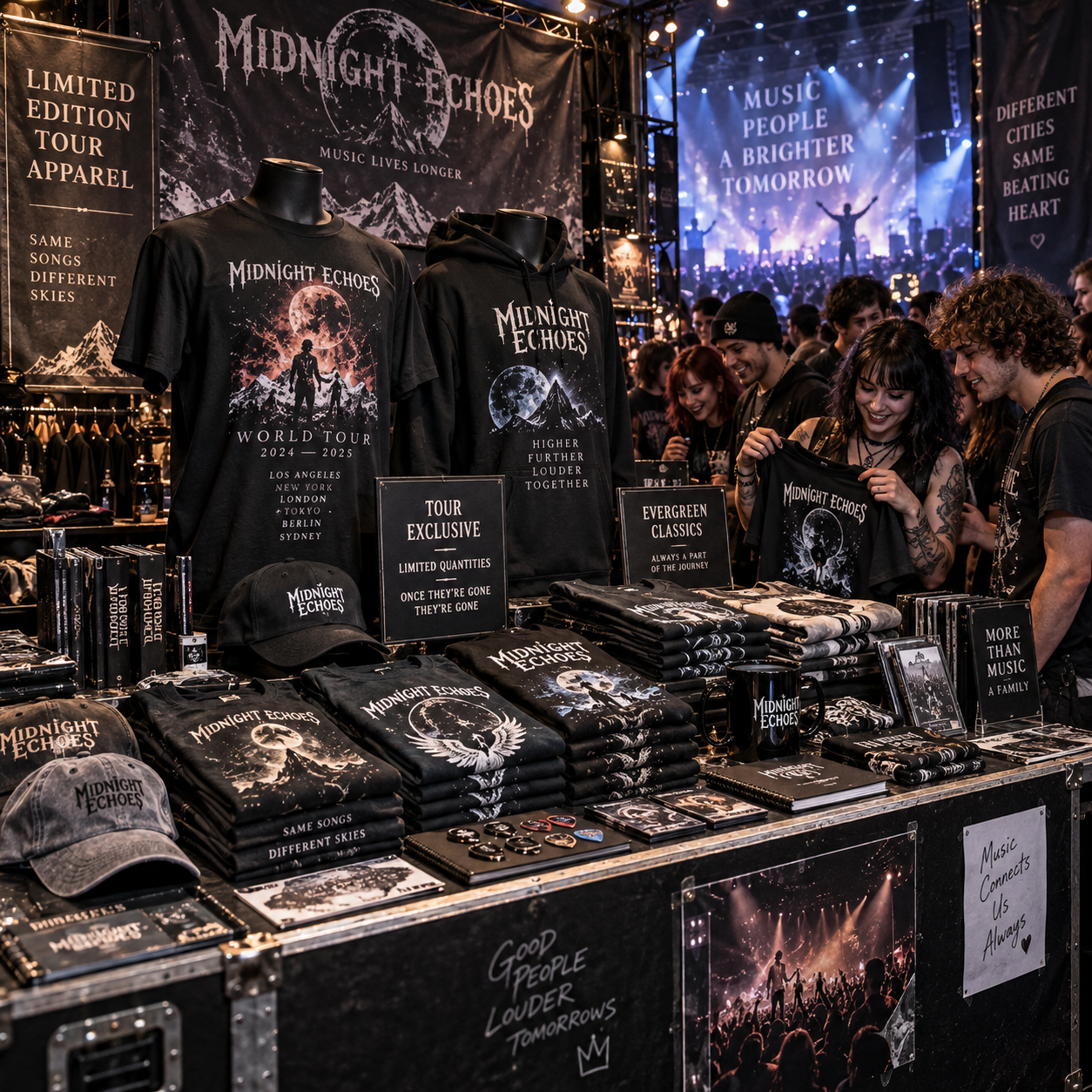
How Social Media Is Revolutionizing Music Merch Sales
A great band T-shirt used to be something fans found at a concert or through an online store. Now, social media can put music merchandise in front of listeners as they watch a video, follow an artist’s tour updates, or join a livestream. The path from discovery to purchase is becoming more direct, though sales still depend on the product, the audience, and a clear buying experience.
For artists and music brands, the opportunity is to connect merch with the story and community around the music. Platforms such as TikTok and Instagram offer ways to show products, invite fan participation, and guide interested followers toward direct-to-fan sales.
From promotion to purchase: the rise of social commerce
Social commerce lets artists connect merchandise discovery with a purchase path through social platforms. Fans might see a shirt in a video, tap a product tag, and continue to a shop without first searching for the artist’s website.
That shorter path can reduce friction, but it does not guarantee a sale. Platform shopping features and availability vary by region and account, and some fans will still prefer a dedicated store. Treat social posts as a bridge to a reliable checkout, not as a replacement for clear product pages, shipping details, and customer support.
Make each promotion easy to act on: show the item clearly, name the release or collection, and provide a direct link or product tag where available. Keep the landing page consistent with the post. If a video features a tour hoodie, the link should take fans to that hoodie rather than a crowded storefront where they have to hunt for it.
Turning fan communities into customers
Fan engagement can support merch sales when products reflect a shared connection to an artist, album, tour, or scene. The most effective approach gives fans a reason to care about the item and a simple way to find it, rather than treating every interaction as a sales opportunity.
Artist branding shapes how merchandise feels: a tour poster-inspired tee, a lyric reference, or a design tied to an album era can carry meaning beyond its practical use. Ask fans which color they prefer, invite them to share concert photos, or respond to questions about sizing. These interactions help artists understand what their community values while making followers feel included.
Use that connection thoughtfully. A comment or poll is a signal of interest, not proof that someone will buy. Keep the offer visible and the product information specific. For independent artists, a modest collection that fits their audience may be more useful than a large catalog that is difficult to promote and manage.
Platform formats that showcase merchandise
Short-form video, Stories, livestreams, and shoppable posts each help present music merchandise in a different way. Choose a format that suits both the product and the audience’s habits, then make the next step clear.
- Short-form video: Use TikTok or Instagram Reels to show a garment in motion, reveal a design detail, or style an item with tour outfits. A quick visual demonstration often answers questions that a product photo cannot.
- Stories: Share reminders, polls, sizing notes, and links during a launch window. Stories work well for timely updates, though their visibility is temporary.
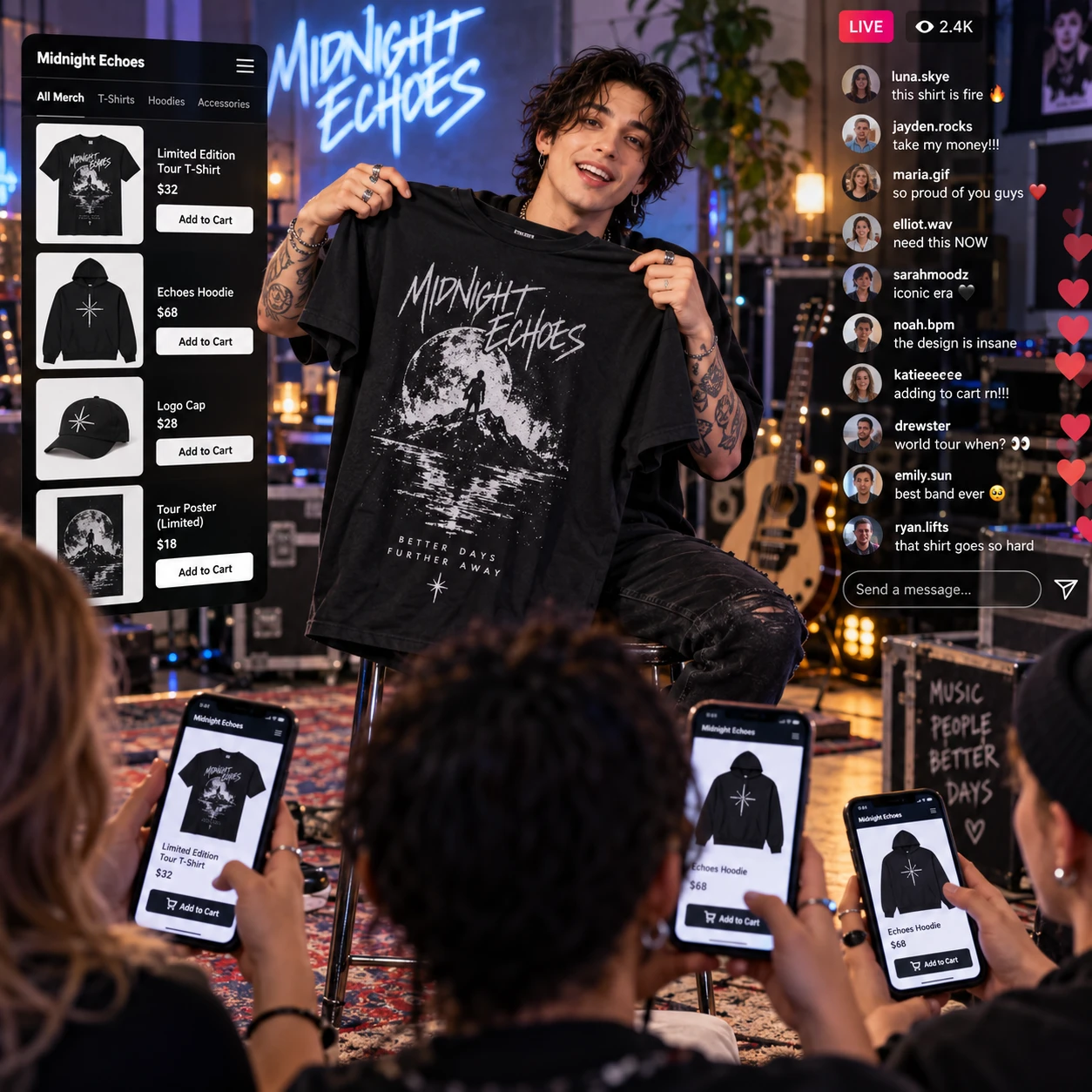
- Livestream shopping: Show products live, answer questions, and explain how a design relates to the music or tour. Test sound, lighting, inventory, and checkout links beforehand; live selling requires preparation and may not suit every audience.
- Shoppable posts: Where platform features allow, tag products so interested fans can move from a post toward the item. Check that tags and links work on mobile before publishing.
Formats are tools, not a ranking of guaranteed performance. Repurpose a strong product shoot across channels, but adapt captions, framing, and calls to action to each platform.
Drops, exclusives, and behind-the-scenes storytelling
Limited-edition drops can give a merch launch a clear moment and a distinctive story. An artist might release a tour-exclusive print, a small run tied to an album anniversary, or a design that features fan-submitted artwork, with the edition size and availability stated honestly.
Behind-the-scenes content can make that story tangible. Show the sketchbook, screen-printing process, sample fitting, or the reason a particular lyric inspired the design. This gives fans context before they see the product link and helps distinguish artist merchandise from generic apparel.
Scarcity should be real. If a run is limited, explain whether the limit comes from a fixed quantity, a short preorder window, or a specific event. Avoid implying that stock is almost gone unless that is accurate. Also plan fulfillment before announcing a drop: a popular post can create orders faster than a small team can pack them, and delays can damage trust.
Partnerships and fan-created momentum
Influencer partnerships, collaborators, and fan posts can introduce music merchandise to new audiences, but their impact depends on fit and follow-through. A creator whose listeners genuinely overlap with an artist’s fans may tell a more convincing story than a larger account with little connection to the music.
Give partners a clear brief: what the item is, why it matters, when it is available, and how viewers can find it. Preserve room for their own voice. For collaborations involving a designer, musician, or fan artist, agree on permissions, credit, compensation, and product approval before promotion begins.
Encourage fan-created content by inviting buyers to share how they style a shirt or wear it at a show. Reposting with permission can strengthen community and provide useful product views. Still, user posts are not a substitute for consistent information about price, sizing, stock, and returns. A burst of attention can fade quickly if the purchase experience disappoints.
Measuring results and improving the approach
Measure social-driven merch sales by tracking the steps from content exposure to purchase, then compare results across posts and offers. Engagement matters, but clicks, completed orders, and customer feedback show whether attention translated into useful outcomes.
Use a simple measurement loop: content, click, checkout, learn. Record the post format and product, monitor link clicks or tagged-product visits where available, and compare them with orders in the store analytics. Unique campaign links or discount codes can help attribute purchases, though they may miss people who see a post and buy later through another route.
- Track saves, shares, comments, and video completion as signs of attention, not sales by themselves.
- Monitor product-page visits, add-to-cart activity, and completed orders to find where shoppers drop off.
- Compare similar posts over time, changing one element at a time, such as the opening shot, product description, or call to action.
- Review returns, sizing questions, and customer messages to spot product or information problems that raw sales totals can hide.
Don’t judge a campaign from one viral post or a single quiet launch. Audience size, timing, stock, price, and the strength of the offer all affect results. Keep a small record of what you tested and what happened; that makes the next release more informed without assuming social media will sell every item.
Frequently asked questions
Artists can promote music merchandise on several platforms, but the right choice depends on where their fans spend time and which formats they can maintain consistently.
Which social platforms work well for promoting music merchandise?
TikTok and Instagram can help artists show products through short-form video, Stories, and creator content. Livestreams and shoppable posts may also help where available. Choose based on audience behavior, platform features, and the team’s ability to keep product links and information current.
How can independent artists sell merch through social media?
Start with a small, manageable collection and a mobile-friendly online store. Post clear product demonstrations, link directly to the featured item, state shipping and sizing details, and track clicks and orders. Social media can bring attention, while a dependable checkout handles the sale.
What kinds of merch content engage fans?
Fans may respond to design reveals, behind-the-scenes production, styling ideas, tour-related stories, and polls that invite genuine input. The content works best when it connects the item to the music or artist identity and gives viewers enough detail to decide whether to buy.
How can artists measure social media merch sales?
Track engagement alongside product-page visits, add-to-cart actions, and completed orders. Use campaign-specific links or codes when practical, and compare results across formats. Interpret attribution cautiously because fans can discover a product on social media and purchase later through another channel.