

Exclusive vs. General Release Merch: What Sells Better?

Choosing between exclusive merchandise and general-release merchandise affects more than product availability. It shapes fan demand, pricing, artist branding, inventory risk, and the way supporters participate in an album campaign or live event.
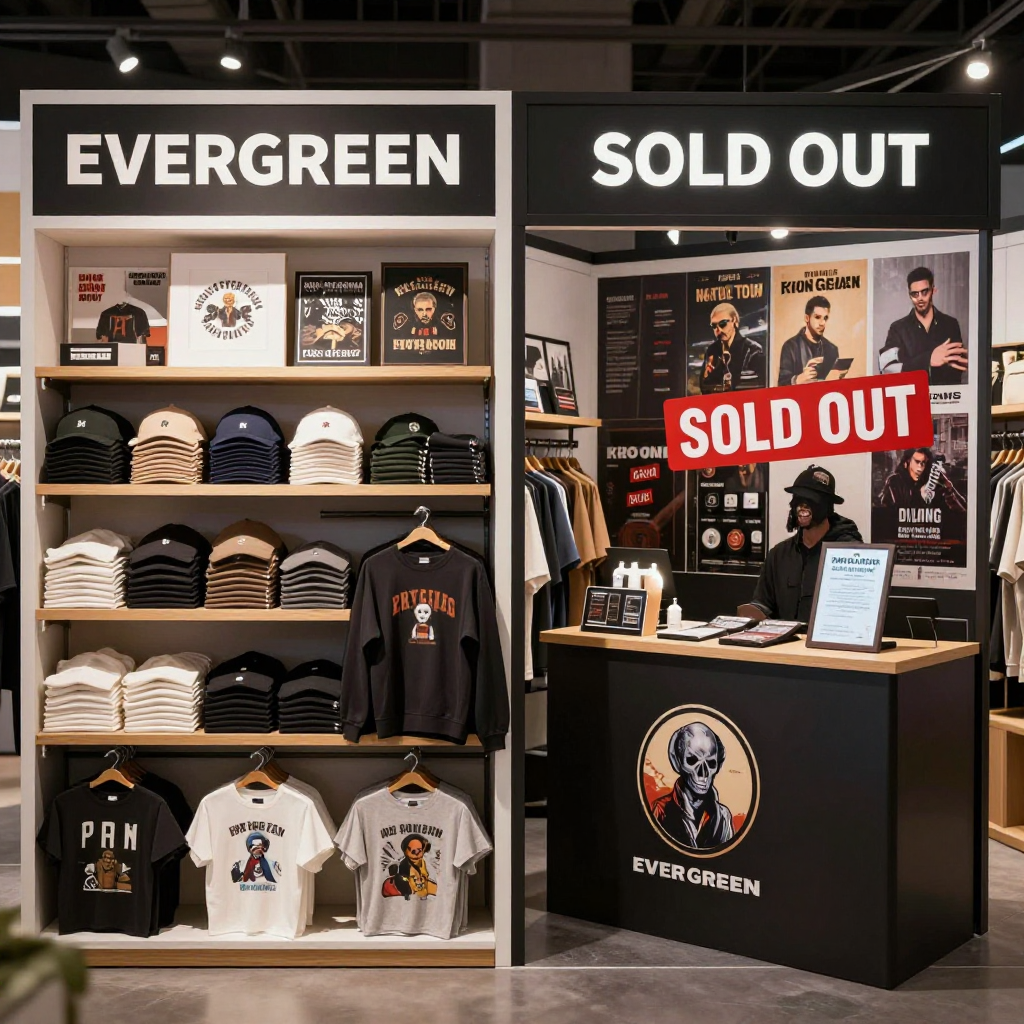
Neither format sells better in every situation. General-release merch usually supports reach and consistent sales, while exclusive merch can create urgency and higher perceived value among dedicated music fans and collectors. The strongest strategy often uses both.
What Is Exclusive Merch?
Exclusive merchandise is a product available only to a restricted audience, for a limited time, at a specific event, or through a particular sales channel. Its appeal comes from scarcity, context, and the feeling that ownership represents a closer connection to the artist.
Common examples include tour-only T-shirts, numbered vinyl variants, album-launch bundles, VIP merchandise, fan-club products, signed posters, and items sold for one weekend or one venue run. Some exclusive products are limited-edition products with a fixed quantity. Others are simply restricted by location or timing.
For music fans and collectors, the story around the product matters. A shirt purchased at a breakthrough show, for example, carries a different emotional meaning from the same design sold year-round online. That context strengthens artist branding and can make a modest product feel collectible.
Exclusivity works best when it feels credible. A product described as a limited edition loses impact if the same item returns repeatedly without explanation. Scarcity should support a genuine moment, such as an album release, anniversary, festival appearance, or final tour date, rather than replace good design and fair pricing.
What Is General-Release Merch?
General-release merchandise is made available broadly and for a longer selling period, allowing new and existing fans to purchase it without attending a specific event or meeting a short deadline.
This category includes evergreen logo apparel, album artwork shirts, hoodies, hats, tote bags, posters, standard vinyl, and repeat-order basics. Artists often keep these products in an online store throughout a campaign or bring them back as reliable tour merchandise.
Availability is the main advantage. A casual listener who discovers an artist through a playlist can still buy a shirt weeks later. A returning fan can replace a worn hoodie. That wider access supports steady demand and gives the artist more opportunities to convert attention into merchandise revenue.
General-release products also make planning easier. A merch team can monitor sell-through, identify popular sizes or colors, and reorder proven items. The compromise is lower urgency. When fans believe a product will remain available, they may postpone the purchase.
Exclusive vs. General Release: Key Differences
The main difference is that exclusive merch prioritizes scarcity and occasion, while general-release merch prioritizes access and continuity. The right choice depends on the audience, campaign objective, product, and ability to manage inventory.
| Factor | Exclusive merch | General-release merch |
|---|---|---|
| Availability | Restricted by time, place, membership, or quantity | Broadly available through regular sales channels |
| Audience | Dedicated fans, collectors, and event attendees | Casual listeners, new fans, and the wider audience |
| Pricing | May support a higher price when the story and quality justify it | Usually needs accessible pricing for repeat and impulse purchases |
| Urgency | High, because fans may miss the opportunity | Lower, because products can often be purchased later |
| Production risk | Higher if the design is niche or demand is difficult to forecast | Lower when previous sales provide reliable demand signals |
| Perceived value | Driven by rarity, meaning, craftsmanship, or access | Driven by design, usefulness, price, and artist recognition |
Pricing strategy requires particular care. A limited-edition product can command more than a standard item, but fans still compare fabric quality, print quality, shipping costs, and the artist’s normal price range. Scarcity does not justify every price.
Inventory and sell-through also differ. Exclusive products may sell quickly but leave little room for replenishment if demand exceeds expectations. General-release products can be reordered, yet they tie up stock for longer and may require ongoing storage or fulfillment.
Which Format Usually Sells Better—and When?
Exclusive merch usually sells better when an artist has strong fan loyalty, a timely event, and a product that feels meaningfully connected to that moment. General-release merch usually performs better when the goal is broad reach, repeat sales, and dependable access over time.
When exclusive merch has the advantage
Limited availability can turn interest into immediate action. A sold-out tour, album launch, major festival appearance, or milestone anniversary gives fans a clear reason to buy now. The strongest opportunities combine four elements: a recognizable artist, a specific story, attractive design, and a credible limit.
- High fan loyalty: Dedicated supporters are more willing to collect variants or pay for event-specific details.
- Strong timing: A release connected to a new album, farewell show, or cultural moment benefits from urgency.
- Distinctive design: A product needs visual or emotional appeal beyond a small quantity.
- Appropriate pricing: Fans accept a premium more readily when quality and meaning are clear.
When general-release merch has the advantage
General-release products are often the safer choice for developing artists, broad campaigns, and products intended to generate sales after the initial announcement. A new listener may want a simple logo shirt but have no reason to purchase a numbered collectible.
Artist visibility matters here. When an act is gaining attention across streaming platforms, social media, or support slots, widely available merchandise captures demand from people who discover the artist at different times. Pre-orders can also test interest before committing to a larger run, although they require clear delivery expectations.
A useful decision test is to ask whether the buyer is purchasing the item or the moment. Everyday apparel and basic accessories usually fit general release. A venue-specific poster, signed pressing, or tour-date garment may fit an exclusive drop.
Benefits and Risks of Exclusive Merchandise
Exclusive merchandise can increase urgency, collectability, fan engagement, and price potential, but it also limits reach and makes inventory mistakes more expensive. Its success depends on authentic scarcity and a well-defined audience.
Key benefits
- Urgency: A real deadline or quantity limit encourages fans to act instead of postponing a purchase.
- Collectability: Numbered editions, signed products, and tour-specific designs appeal to collectors.
- Stronger engagement: Fans who attend a show or join a membership program receive a tangible marker of participation.
- Premium potential: A meaningful, well-made limited edition may support a higher price than an everyday item.
- Brand storytelling: Exclusive products can document an album era, tour leg, collaboration, or career milestone.
Key risks
Limited runs can miss the audience in either direction. Overproduction leaves specialized inventory that may become difficult to sell once the moment passes. Underproduction can frustrate fans and create complaints if the release appears designed to manufacture artificial scarcity.
Exclusive products also reach fewer people. A tour-only item may perform strongly at a sold-out venue while generating no sales from fans who cannot attend. The correction is to reserve exclusivity for products with genuine event value and offer a related general-release alternative for the wider audience.
One practical safeguard is to separate the exclusive feature from the core design. For example, a general album shirt might remain available online, while a tour-only version adds the city list, date, or numbered back print. That approach protects accessibility without removing the collectible element.
Benefits and Risks of General-Release Merchandise
General-release merchandise provides broad access, longer selling windows, and more predictable replenishment, but it can create less urgency and feel less special to collectors.
Key benefits
- Accessibility: New listeners and fans who miss an event can still purchase the product.
- Longer selling window: The item can continue earning sales across an album cycle or tour season.
- Predictable demand: Past orders and store data can guide future inventory decisions.
- Broader appeal: Simple apparel, hats, and totes can suit casual fans as well as dedicated supporters.
- Repeat-order potential: Reliable basics can be reordered when popular sizes or colors sell through.
Key risks
The main weakness is weaker urgency. Fans may save the product for later, and that later purchase may never happen. A general-release range can also become visually repetitive if every item uses the same logo without adapting to a new album, tour, or audience segment.
Long availability does not remove inventory risk. Slow-moving products occupy cash and storage, while too many sizes, colors, or designs make sell-through harder to interpret. Start with a focused range, review sales by product and size, and expand only when demand supports it.
General-release does not have to mean ordinary. Strong artwork, comfortable blanks, useful accessories, and clear album-era storytelling can make an always-available product feel relevant without pretending it is rare.
How to Build a Balanced Merch Strategy
A balanced merch strategy uses general-release essentials for reliable access and exclusive drops for moments that deserve urgency. This mix gives artists reach without sacrificing excitement.
Use a two-layer product range
- Build the foundation: Offer a small selection of general-release products, such as a logo shirt, album design, hoodie, or tote, at accessible price points.
- Add the event layer: Introduce tour-only apparel, signed items, numbered editions, or launch bundles for highly engaged fans.
- Match the limit to the reason: Explain whether the restriction comes from a venue, date, membership, collaboration, or fixed edition.
- Measure sell-through: Track sales by item, size, channel, and release period before expanding the range.
- Protect the fan relationship: Avoid misleading countdowns, unexplained reprints, and pricing that makes basic access feel exploitative.
Pre-orders can help artists test demand for an exclusive product, especially when the design is specialized or the audience size is uncertain. They reduce guessing, but they also create obligations: communicate the production timeline, keep order records accurate, and avoid promising a delivery date that depends on unconfirmed manufacturing capacity.
For a developing artist, general-release basics often provide the best starting point because they maximize learning and reach. A more established act with an active collector base can layer in limited-edition products around album launches, tour merchandise, and milestones. Labels and merch teams should judge each release against three questions: Who is it for? Why buy it now? What happens if demand is lower than expected?
Frequently Asked Questions
Is exclusive merch more profitable than general-release merch?
It can be, but profitability depends on price, production cost, demand, and sell-through. Exclusive merch may earn more per item, while general-release merch may produce more total sales over a longer period.
What types of music merch work best as limited editions?
Tour posters, signed vinyl, numbered prints, venue-specific shirts, anniversary products, album variants, and VIP bundles often suit limited editions because their connection to a date or event is easy to understand.
Should new artists start with exclusive or general-release products?
Most new artists benefit from a focused general-release range first. Once they understand which designs, sizes, and price points resonate, they can add small exclusive drops tied to shows or campaign milestones.
How can artists create demand without overproducing exclusive merch?
Use small, clearly explained runs, pre-orders where practical, focused product choices, and strong launch communication. Test one distinctive item instead of producing many specialized designs at once.
Can exclusive and general-release merch be sold together?
Yes. A general-release album shirt can sit beside a numbered tour edition, giving casual fans an accessible option while collectors receive something more restricted. Clear labeling prevents confusion and makes the value difference easier to understand.
General-release merchandise is the dependable engine of an artist store: accessible, repeatable, and easier to replenish. Exclusive merchandise is the event signal: timely, collectible, and capable of deepening fan participation. The strongest music merch programs use each format for the job it performs best, with product quality and audience fit leading the decision.