

The Impact of Tour Merch on Artist Visibility and Profit
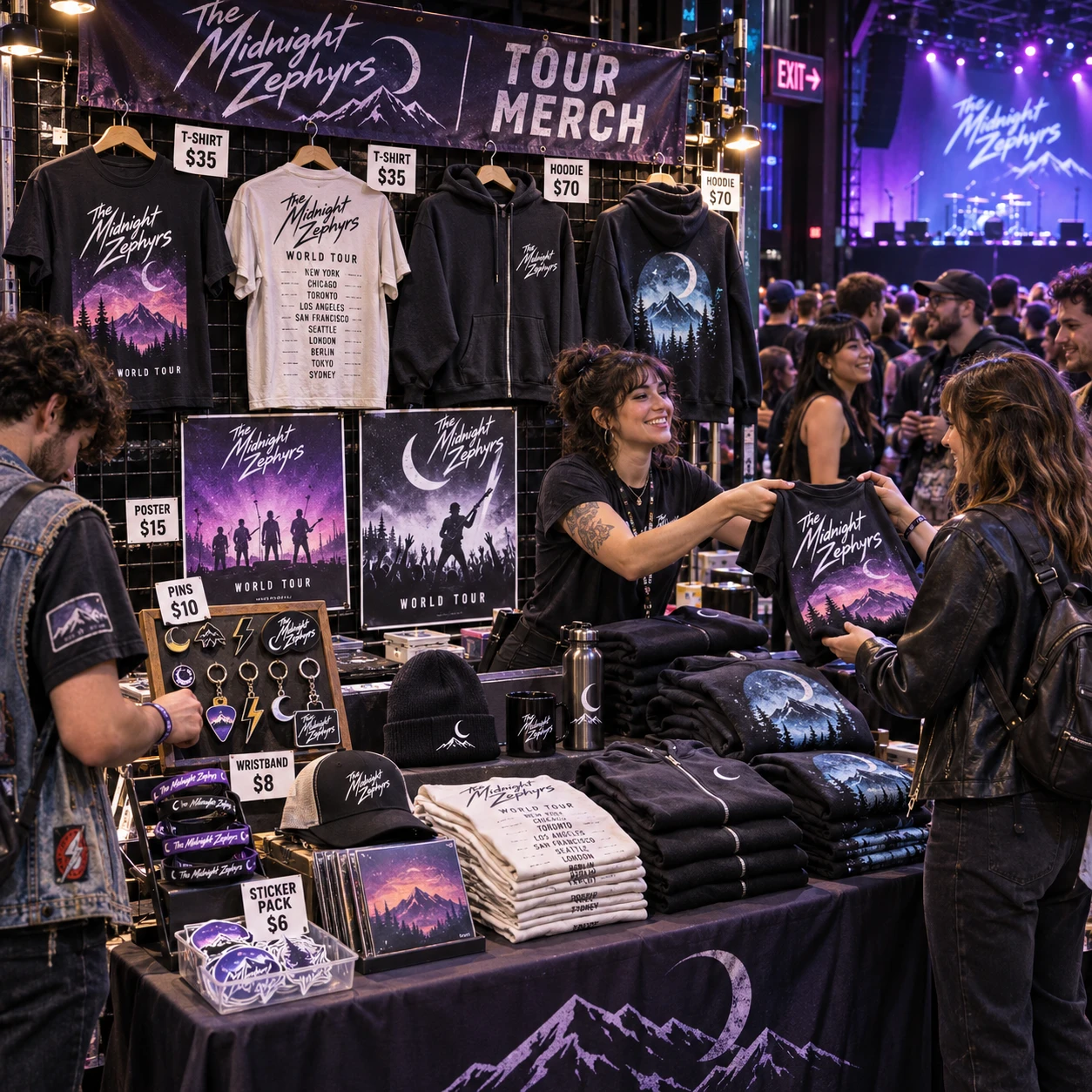
Tour merchandise can make an artist visible long after the lights come up, while creating a direct source of income at live events and online. Its impact depends on more than having a merch table: design, audience demand, production costs, and inventory management all shape whether merchandise strengthens an artist’s brand and earns a profit.
Tour Merch as a Visible Extension of an Artist’s Brand
Tour merchandise extends an artist’s brand into everyday life through designs fans can wear, carry, or display. A clear visual identity helps people recognize the artist beyond the stage and gives fans a tangible connection to a tour or album.
Apparel and accessories can carry recognizable artwork, lyrics, symbols, or a tour’s name and dates. The strongest designs feel connected to the artist’s music and visual world, rather than looking like generic products with a logo added. Tour-specific details can also give an item meaning beyond its practical use.
That visibility has a natural limit: a shirt only promotes an artist when someone chooses to wear it, and overly crowded designs may be hard to recognize at a glance. Aim for a consistent look across the merch table, social media, stage visuals, and online store. Consistency makes the artist easier to identify, while a few distinct designs give fans room to choose what suits them.
Turning Fan Connection into Merch Demand
Tour merch sells when it reflects a connection fans already feel and gives them a reason to take part. Shared concert memories, meaningful artwork, and limited tour-specific products can turn audience engagement into purchase interest.
A merch item tied to a particular tour, city, or album can serve as a keepsake. Fans may also buy merchandise to express their identity and show support for an artist in public. These motivations are strongest when the design feels authentic to the artist and the product has value beyond being described as “exclusive.”
Artist teams can build interest by previewing designs before a tour, showing them in use, or explaining the idea behind a piece. At the venue, readable pricing and an easy-to-find merch table help interested fans follow through. Exclusivity can create urgency, but it should be honest: if a product is limited, make the quantity or availability clear. Artificial scarcity can frustrate fans and weaken trust.
Fan engagement is a demand signal, not a guarantee of sales. Likes and comments may show that an image caught attention, but they do not confirm that fans will buy it at a particular price. Use feedback to guide product choices, then compare it with actual sales.
How Tour Merch Generates Revenue
Tour merchandise generates revenue through direct sales at live events and through online sales during or after a tour. Profit depends on the amount left after production, transport, venue arrangements, payment processing, staffing, and unsold stock are accounted for.
Venue sales give fans an immediate way to buy while the event is fresh in their minds. An online store can reach people who could not attend or who missed their size, and it can keep products available after a show. Together, the channels can serve different audiences, but they also require coordination so prices, stock levels, and product availability stay accurate.
A useful starting point is to estimate the contribution per item:
Contribution per item = selling price − direct costs per item.
Direct costs may include manufacturing, packaging, payment fees, and any venue commission tied to a sale. This figure is not the same as final profit: travel, storage, staff, setup, and unsold inventory can reduce the amount left over. Compare sales by product and show, then evaluate results against the full costs of running the merch operation.
Some venues charge a commission or impose rules on sales, so confirm the terms before setting prices. A higher price may protect margin but put a product out of reach for some fans; a lower price can encourage sales while leaving too little to cover costs. The right choice depends on the product, audience, and actual expenses.
Choosing Products Fans Will Want to Buy
Tour merch works best when products match the artist’s identity, the audience’s preferences, and the price fans can reasonably pay. A focused range of well-chosen apparel and accessories is usually easier to produce, display, and manage than a large assortment with uncertain demand.
Start with a simple product mix: for example, a T-shirt, a warmer layer such as a hoodie, and a lower-priced accessory or print. The right combination varies by genre, season, venue, and audience. A product fans will use or keep is more likely to support both immediate sales and ongoing artist visibility.
Before ordering, check these practical details:
- Design: Make artwork legible at a distance and consistent with the artist’s branding.
- Quality: Choose materials and printing that meet the price and intended use.
- Sizing: Offer a considered range, review past sales where available, and make size information easy to see.
- Pricing: Account for costs and venue terms, then check that prices are clear and consistent across channels.
- Display: Show samples or images so fans can assess colors, fit, and design without unpacking every item.
Ordering too many variations can split demand across colors and sizes, leaving the most popular option unavailable while slower items pile up. Yet offering only one size or product can exclude fans who would otherwise buy. Use past sales as a guide when possible, and treat a first tour or new design as a test rather than a sure thing.
Managing Merch Operations on the Road
Managing tour merch means coordinating production, stock, transport, venue sales, and replenishment across changing locations. A workable plan reduces missed sales and avoids tying too much money up in products that may not sell.
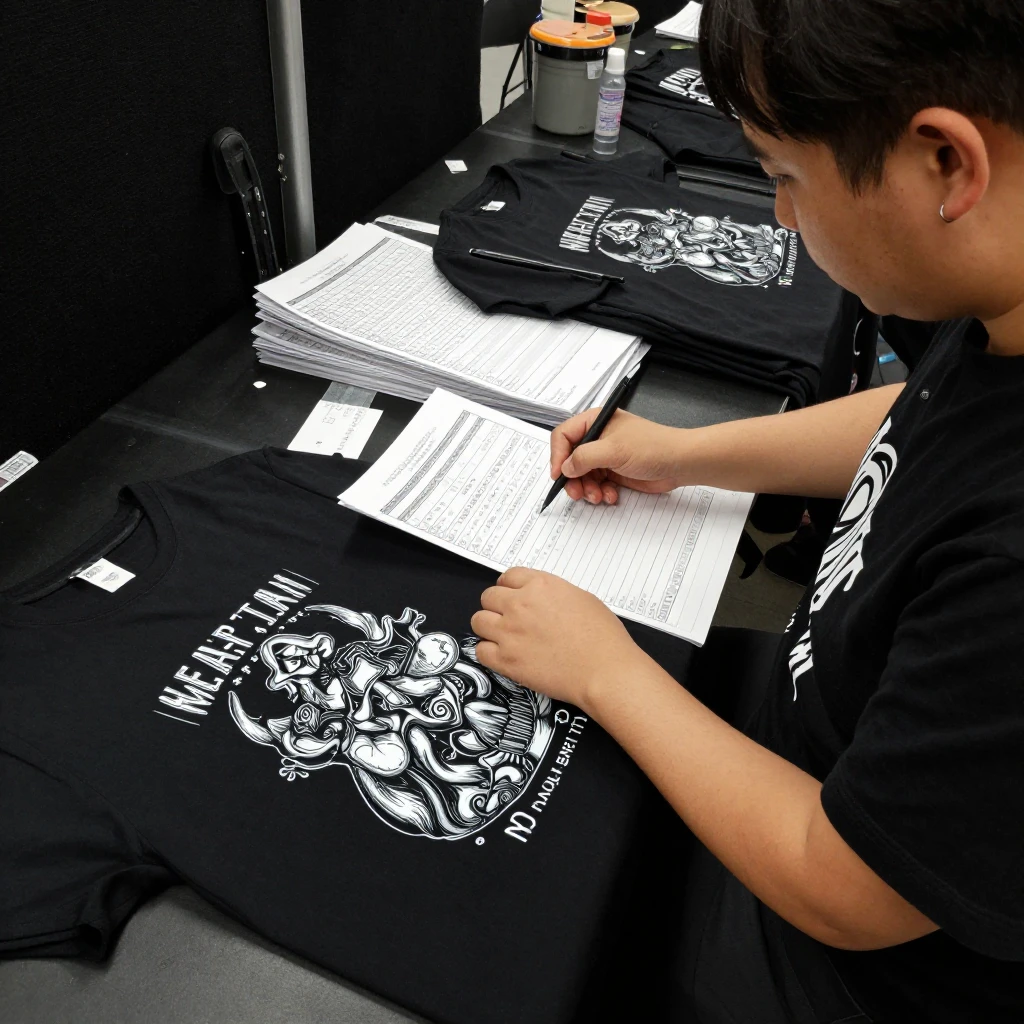
Set a production deadline that allows time for quality checks and delivery before the first show. Count items by product, size, and location, and keep a simple record of what arrives, sells, transfers, or returns. Inventory management does not need to start with complicated software; a shared, consistently updated spreadsheet can help a small team spot discrepancies and forecast restocks.
Before each live event, confirm who handles setup, sales, payments, and end-of-night counts. Check where the merch table can operate, which payment methods are accepted, and whether venue rules affect staffing or sales. A clear display and visible prices make it easier for fans to browse, especially when the line is moving quickly.
Unsold inventory is a real cost: it occupies transport and storage space and may not suit a later tour or season. On the other hand, ordering too cautiously can mean running out of popular sizes early. Use sales from the first shows to adjust later orders when production schedules allow. For a new product, a smaller initial run may reduce exposure, even if the per-unit cost is higher.
Extending Visibility and Sales After the Tour
An online store can keep tour merch visible and available after the final show, while social sharing helps fans continue to display the artist’s brand. Post-tour sales work best when product availability, shipping details, and remaining stock are managed clearly.
Decide which items should remain in the online store and whether tour-specific products will be available only while supplies last. Make it clear when an item is a limited leftover rather than a planned restock. Accurate photos, product descriptions, size charts, and shipping information reduce uncertainty for buyers who cannot inspect the product in person.
Fans wearing or displaying merchandise may share it on social platforms, providing organic exposure to their own communities. Artists can encourage this by reposting fan photos with permission and credit, or by sharing behind-the-scenes design stories. Avoid treating every buyer as a marketing channel; the product still needs to deliver value on its own.
Review online and venue sales together after the tour. Note which designs, sizes, and price points performed well, what remained unsold, and which operational costs were easy to overlook. Those observations can inform the next run. Tour merch can build visibility and profit when brand fit, fan demand, and cost control work together; no single design or sales channel guarantees either result.